construction
Why a Temporary Scaffold Roof Was Essential at Holnest Farmhouse
project
No.01
date
07.06.2026
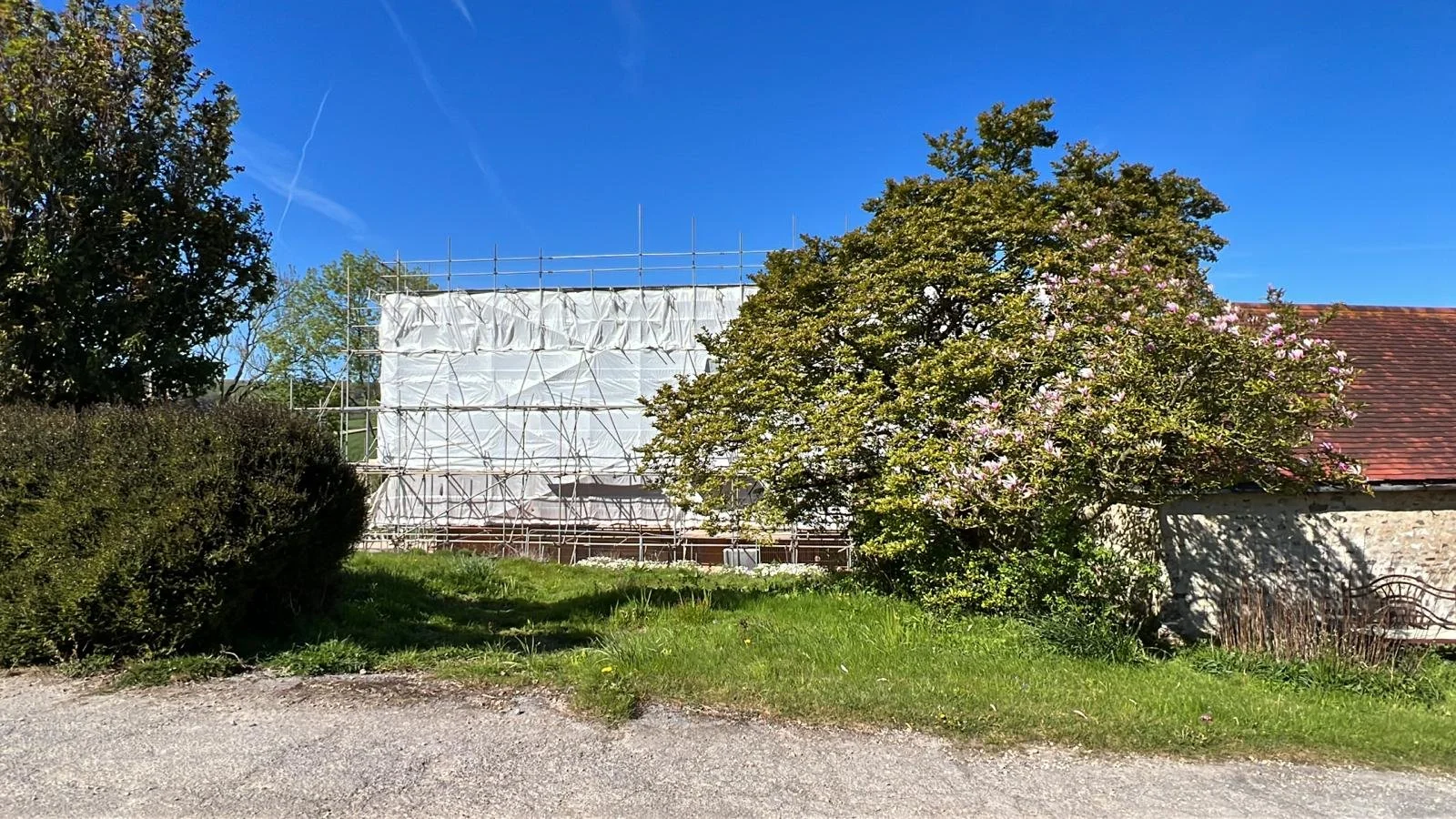
As construction projects progress, some decisions prove their value almost immediately. This was the case at Holnest Farmhouse, one such decision was the installation of a full temporary scaffold roof over the building.
With works programmed to commence in the autumn, the project initially began with carefully controlled roof works undertaken during the ecologically appropriate period between September and October. Once these early stages were complete, the wider refurbishment and extension works could progress.
Given the age of the farmhouse, the extent of the roof alterations, extension and refurbishment works, not to mention the likelihood of discovering unforeseen conditions within the existing structure, maintaining a dry and protected working environment was always going to be important.
The decision was therefore taken to erect a temporary covered scaffold system over the building, before major any opening-up works commenced. As the Devon weather inevitably turned through the autumn and winter months, the benefits of this approach quickly became apparent.
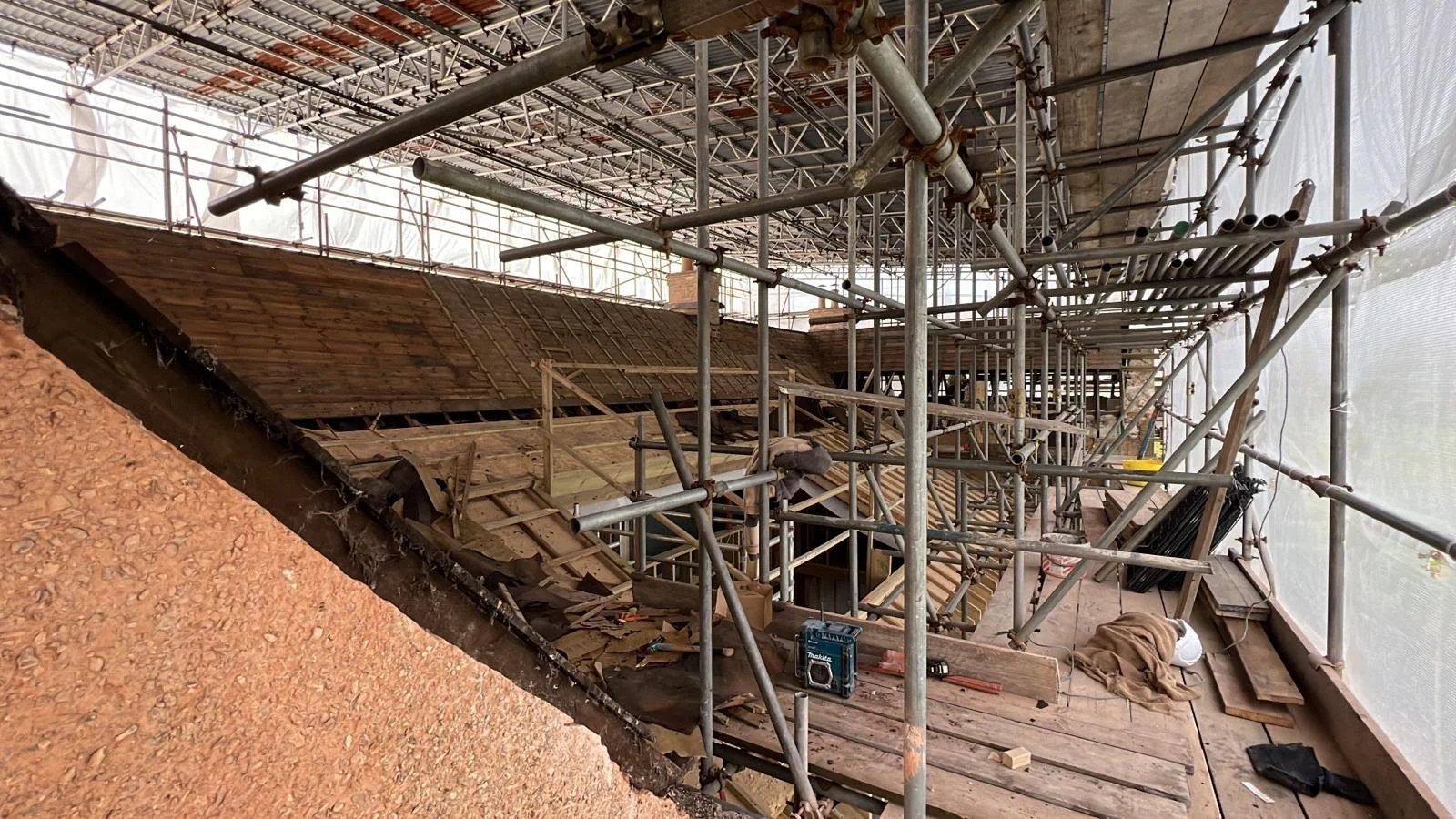
The temporary roof allowed existing roof coverings to be removed, chimney works to be undertaken, and extensive investigations into the existing structure to proceed at a practical rate without being dictated by the weather. It also provided protection to the existing building fabric that became exposed while areas of the roof and structure were removed, altered and replaced.
As works progressed, several unexpected conditions were uncovered, including some concealed timber deterioration and structural elements that differed from original assumptions. This ability to investigate, assess, and coordinate solutions within a dry environment significantly reduced programme disruption that would have occurred otherwise, and allowed works to continue safely and efficiently.
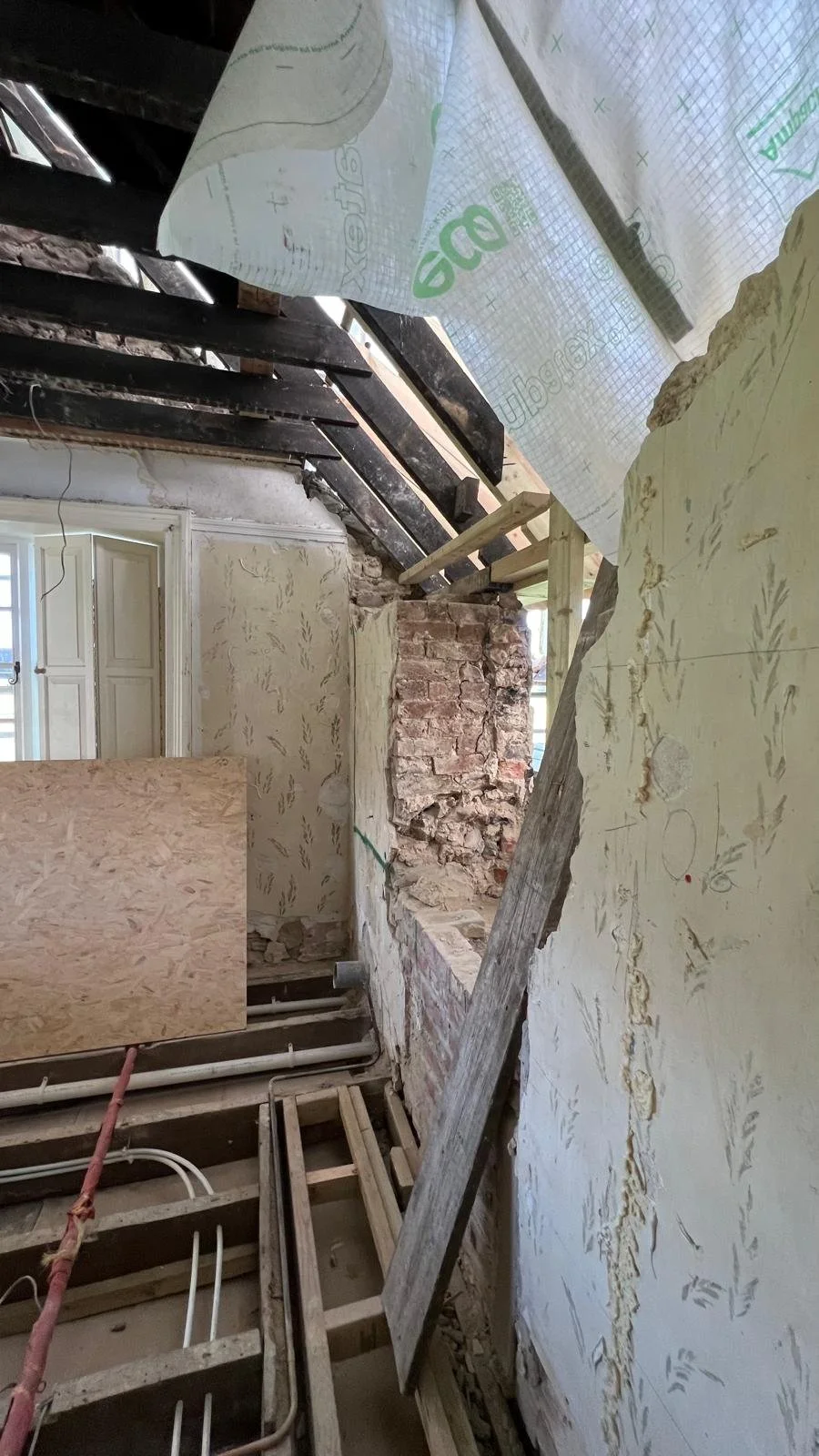
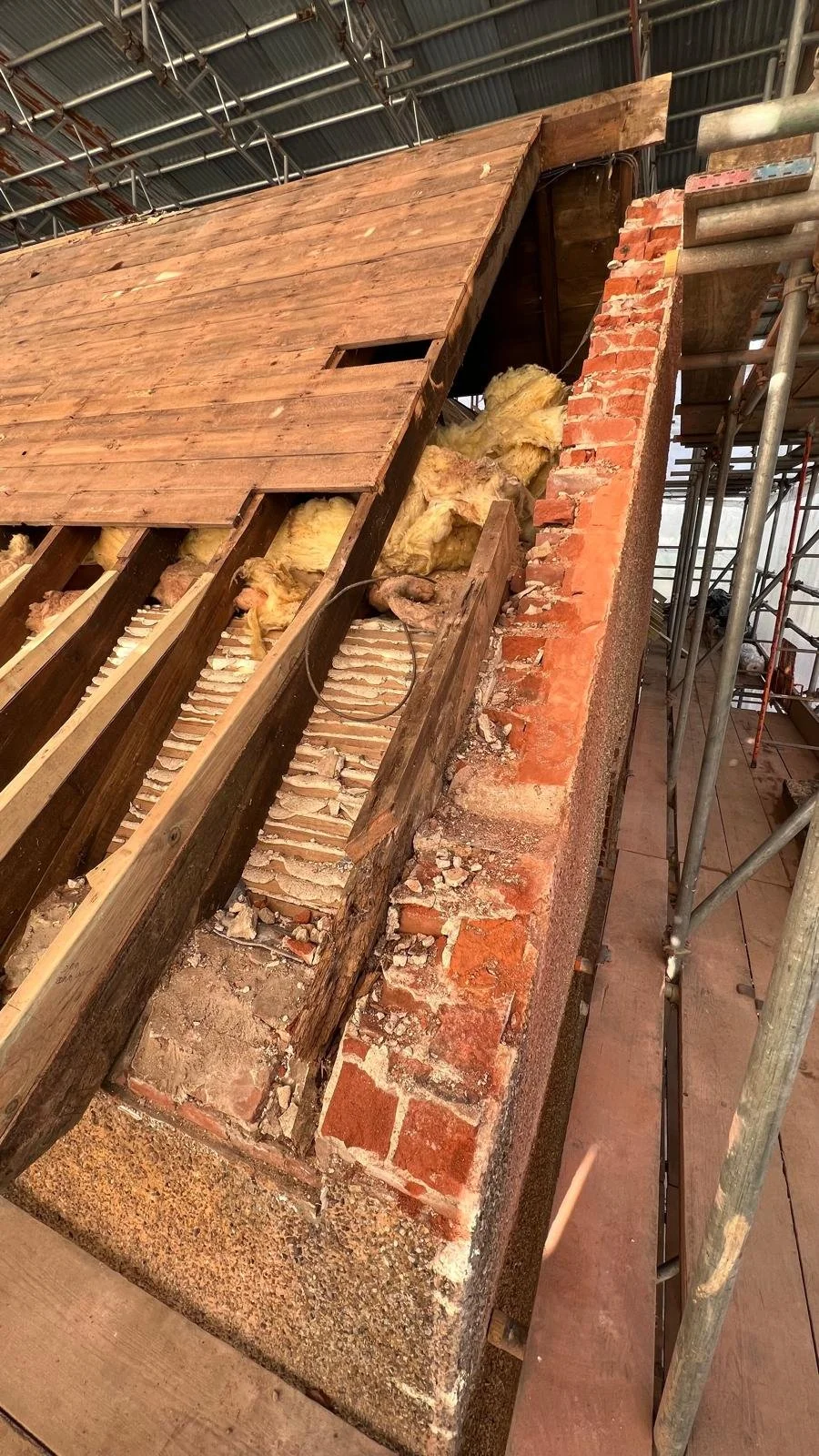
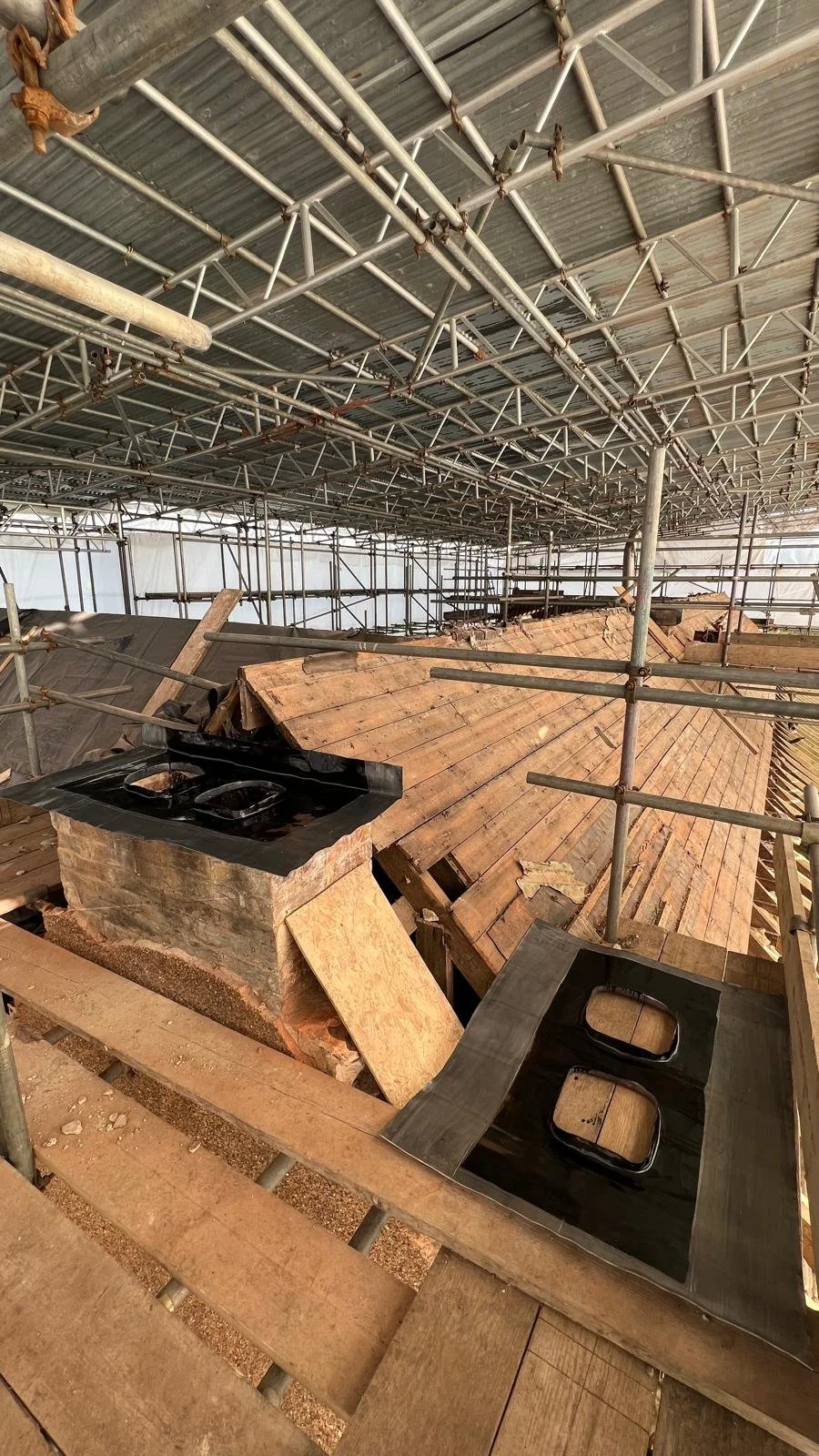
While temporary roofing structures do represent a considerable investment at the outset of a project, they can often provide substantial value on complex refurbishments, particularly where older buildings are involved and the extent of hidden conditions is unknown.
At Holnest Farmhouse, the covered scaffold has allowed construction to progress through the winter and spring months with far greater certainty, helping maintain momentum while protecting both the existing building and ongoing works.
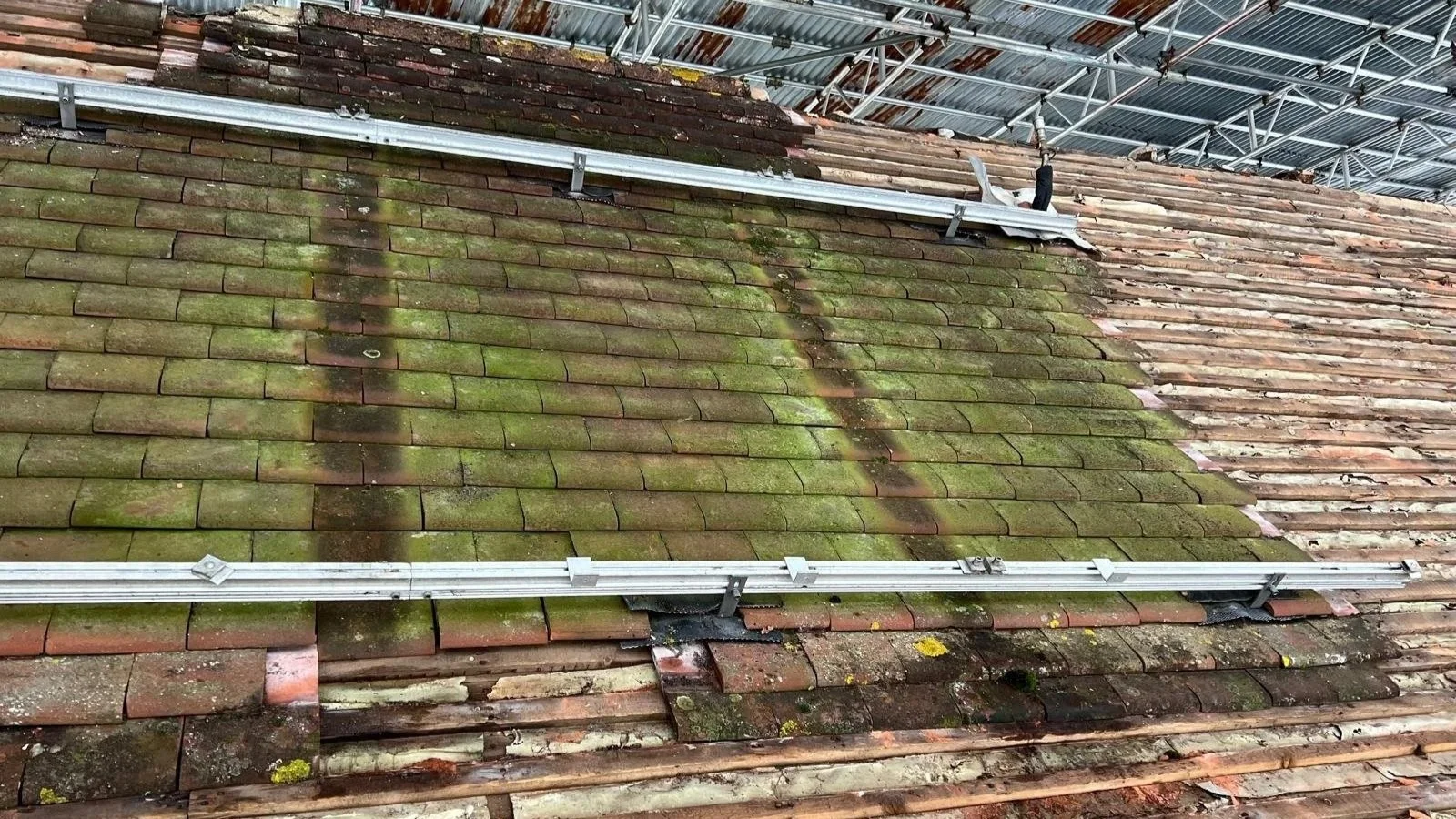
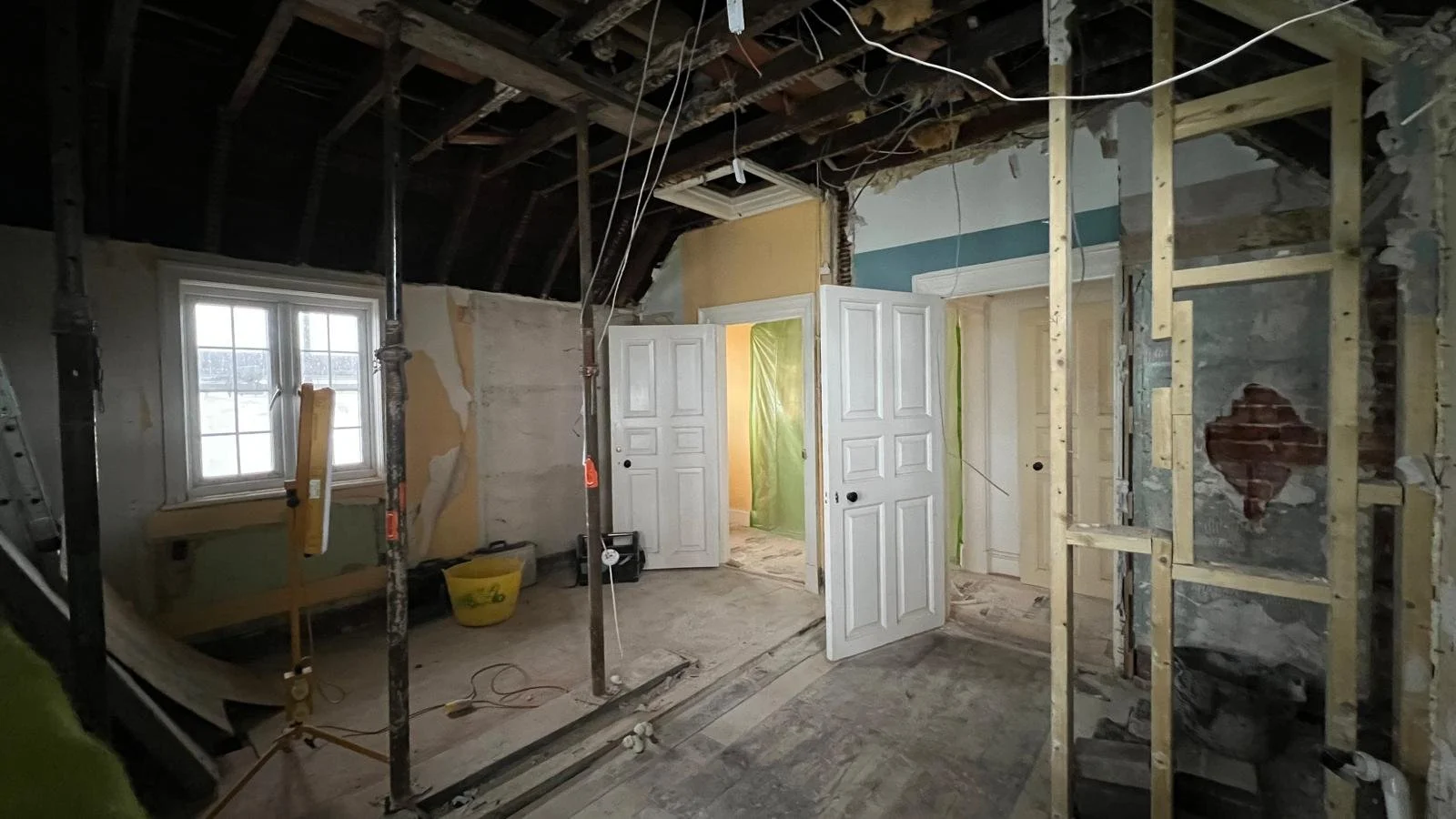
As the project continues to evolve, it remains one of the key early decisions that has contributed to the successful progression of the works on site.