
No.22
Design & Planning
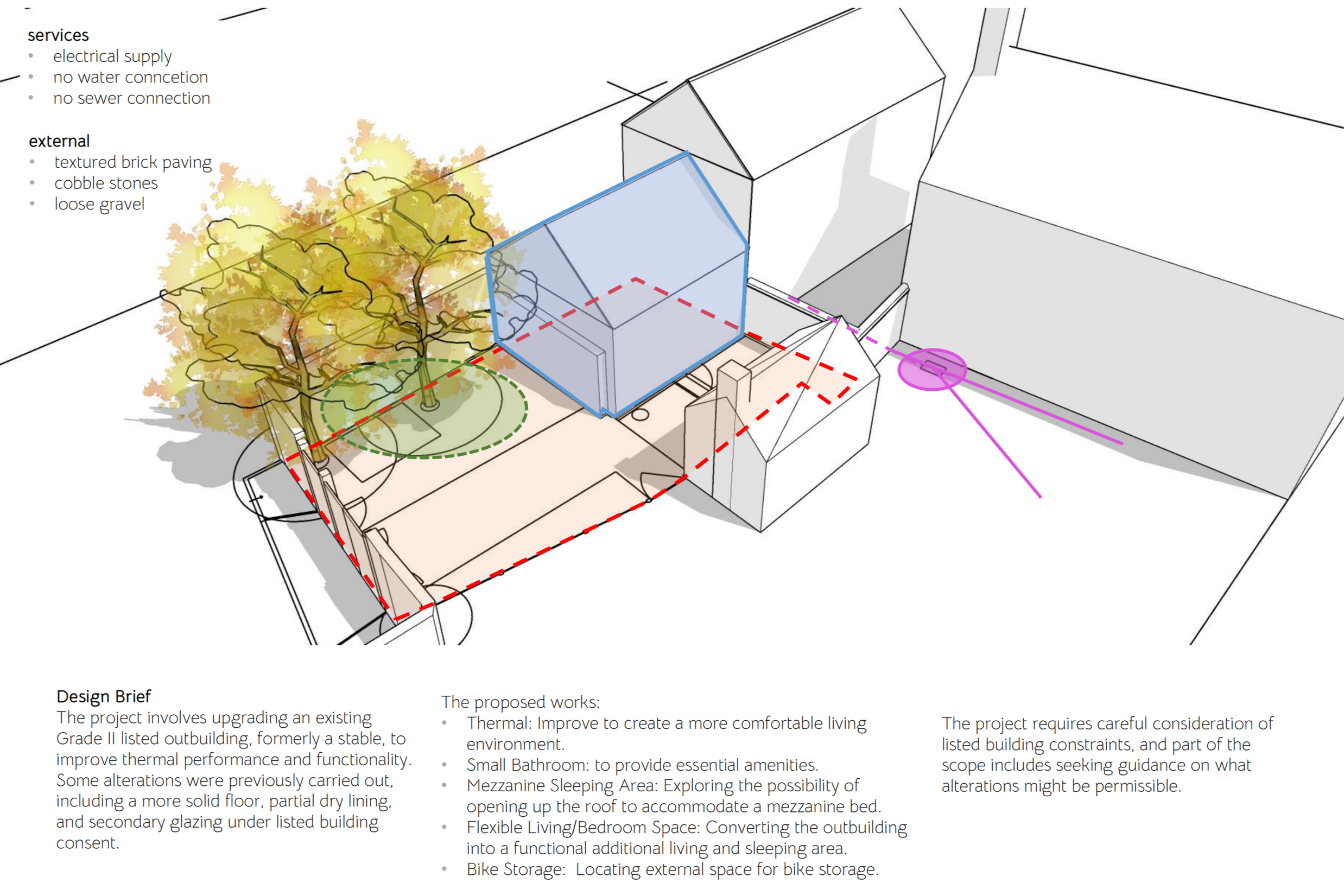
lvp architects were appointed to work on the refurbishment and extension of a curtilage-listed outbuilding located within the grounds of a residential property on Church Street, Chesterton, Cambridge.
The project began with a detailed review of the existing building, its condition, historic significance, and its relationship to the main house and surrounding outbuildings. While modest in scale, the outbuilding had evolved over time and no longer provided a comfortable or practical space for use.
The site sits within a sensitive historic context, requiring a careful and considered approach to any proposed changes. Early discussions focused on understanding what could be achieved without compromising the character of the outbuilding or its contribution to the wider setting.
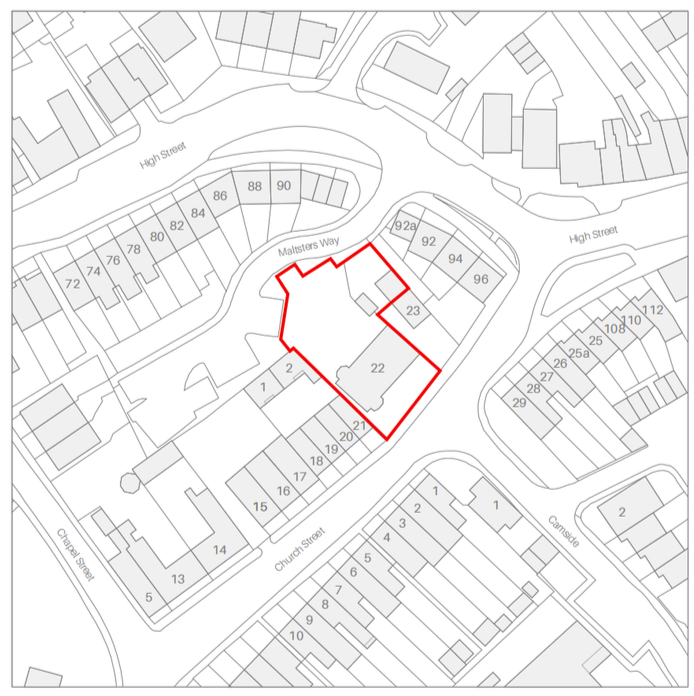
Existing Situation
The existing outbuilding is a simple historic structure, positioned to the rear of the main dwelling and read as a secondary element within the garden. Internally, the building was used as a storage space, lacked insulation, thermal comfort, and a clear spatial arrangement, limiting its usability throughout the year.
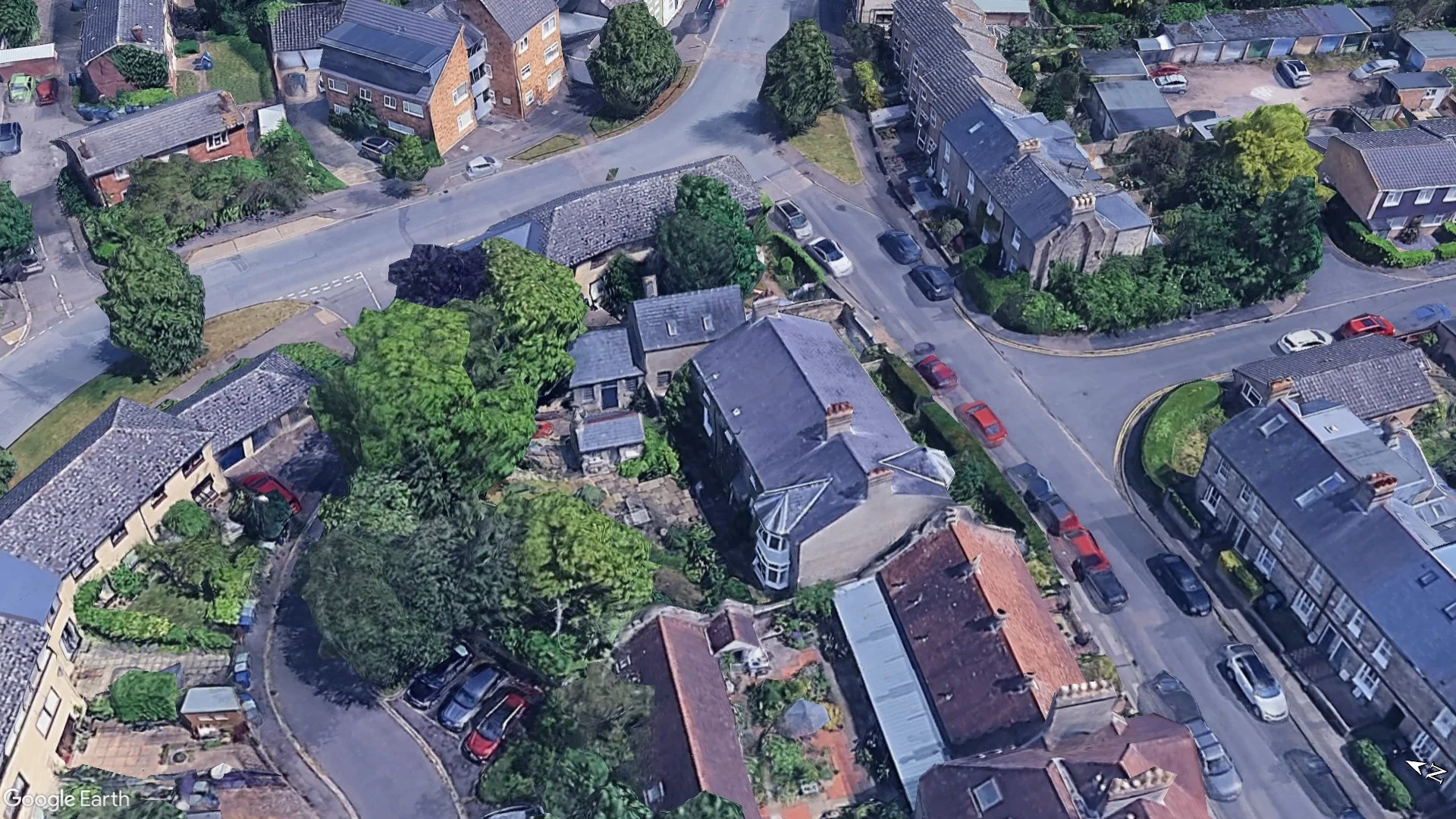
Design Approach
The design approach was guided by a principle of restraint. Rather than seeking to transform the building, the proposals focus on carefully enhancing what already exists.
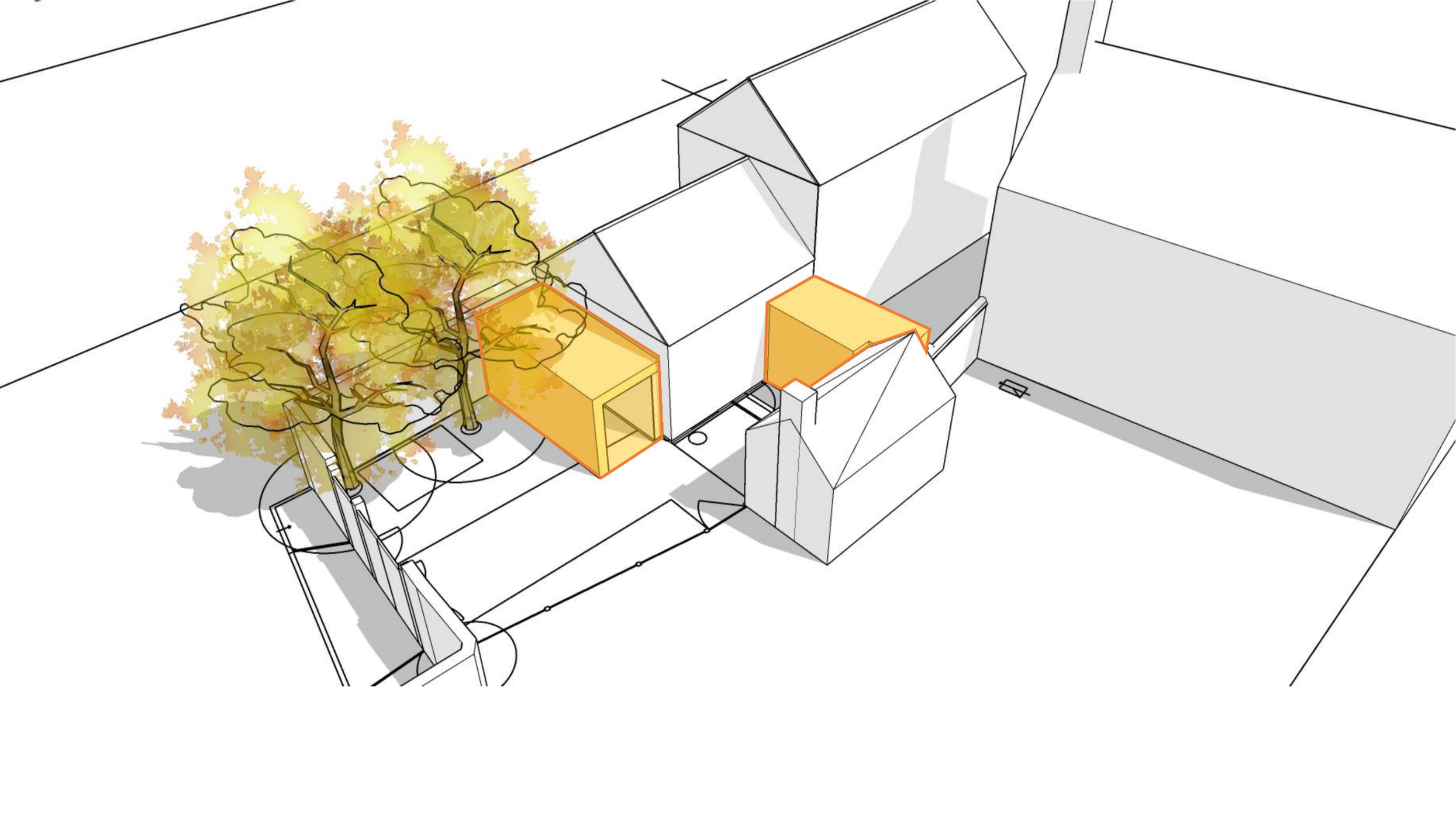
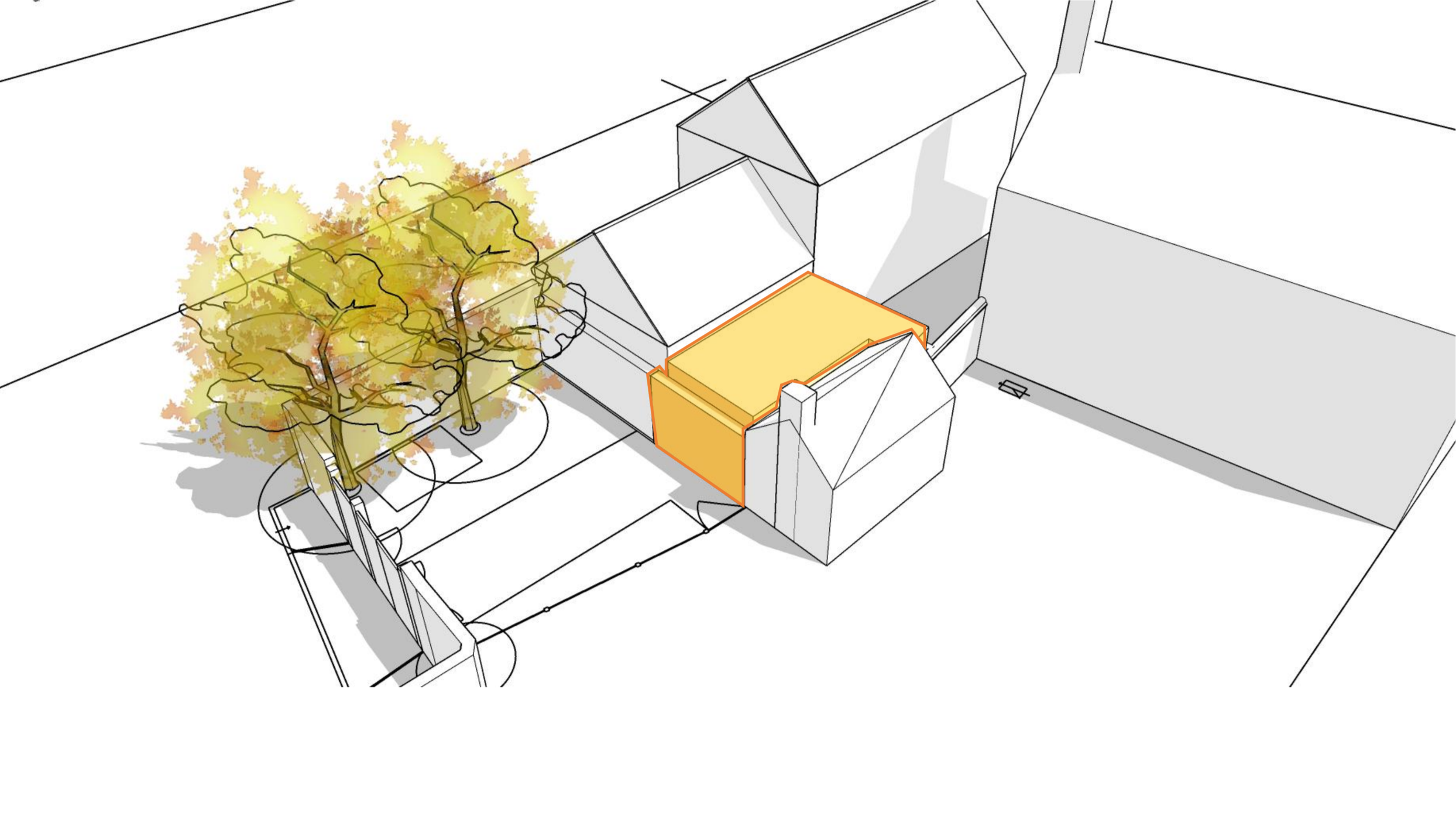
A modest extension was introduced to improve internal functionality and allow the building to accommodate a new home gym use. This extension is deliberately subservient in scale and form, ensuring the original structure remains the dominant element.
Material choices and detailing were developed to sit comfortably alongside the existing fabric, with new interventions clearly legible but sympathetic to the historic context.
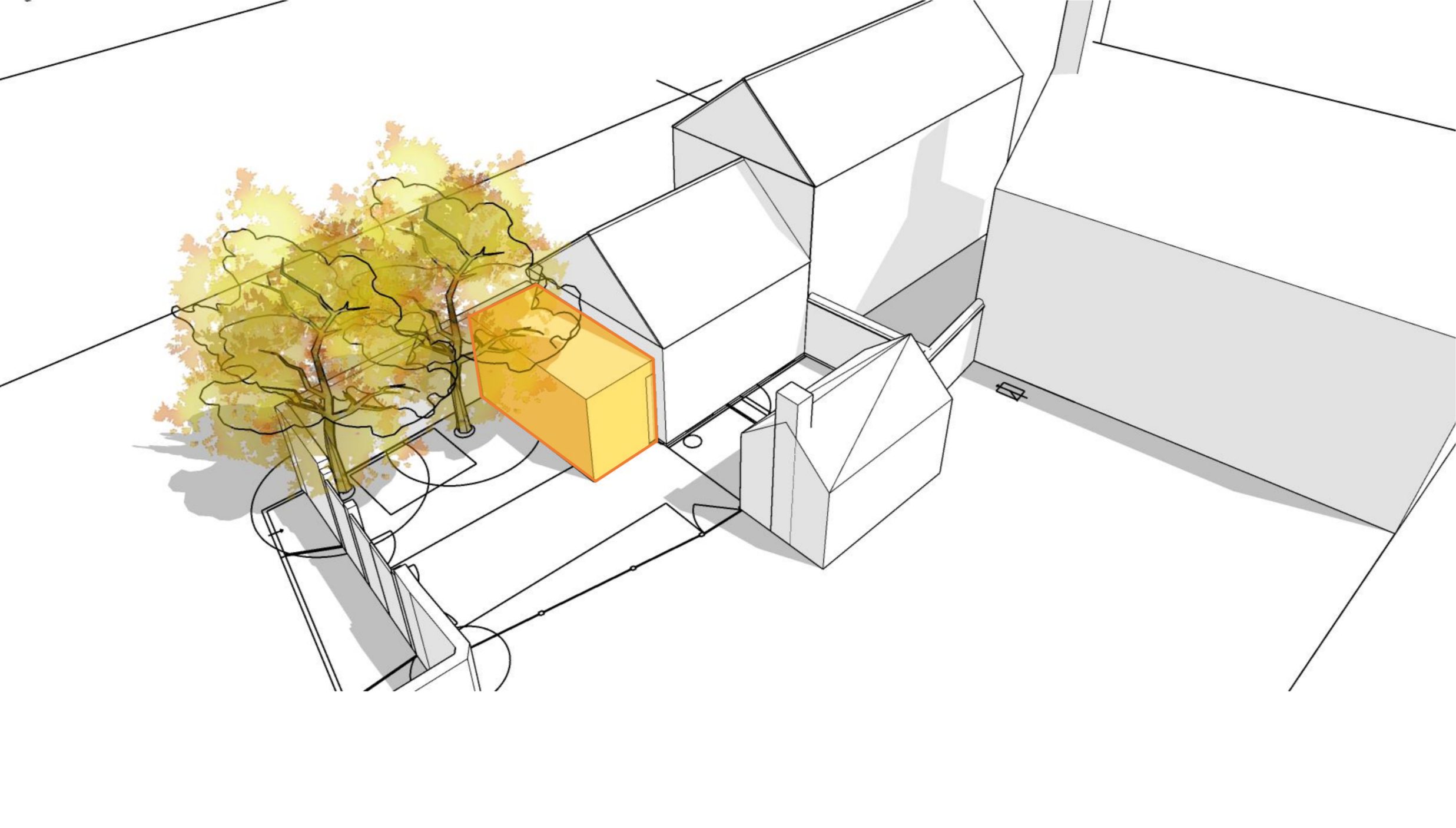
Planning & Materials
Following early discussions and a site meeting with the Conservation Officer, the proposals were developed to respond positively to the site’s historic context and the curtilage-listed status of the outbuilding. The scale, form, and location of the extension were supported in principle, with guidance provided on materials and detailing.
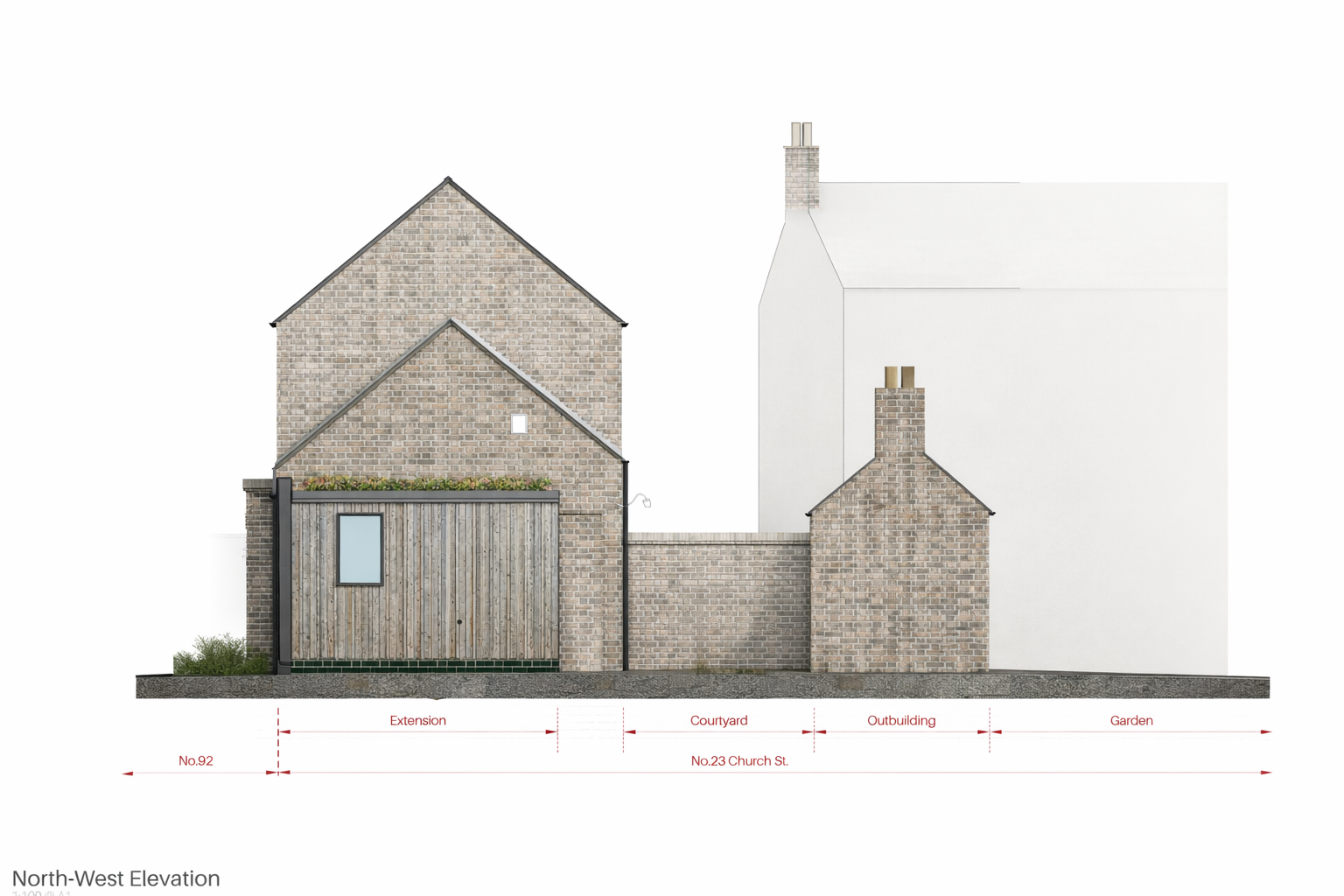
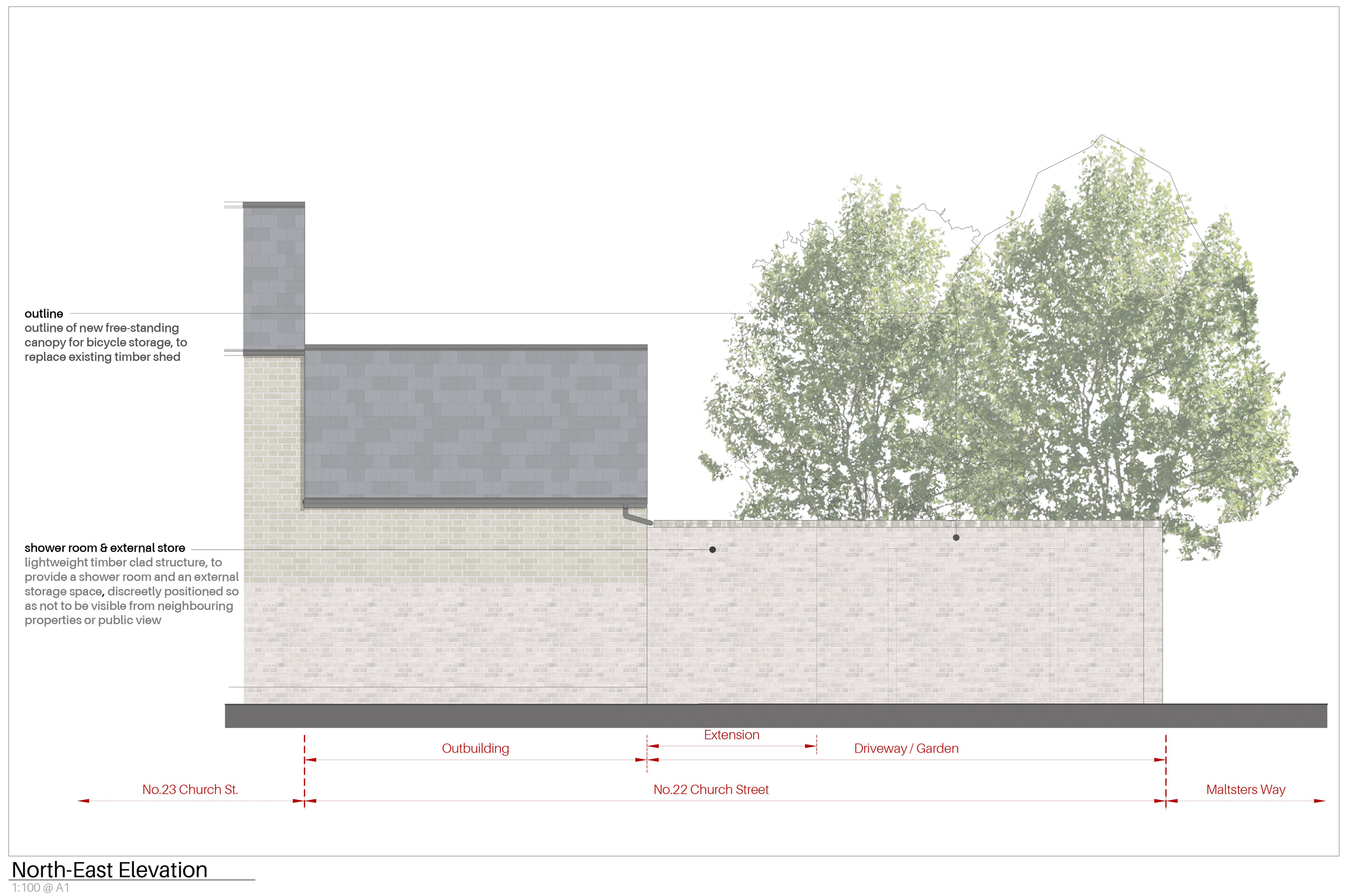
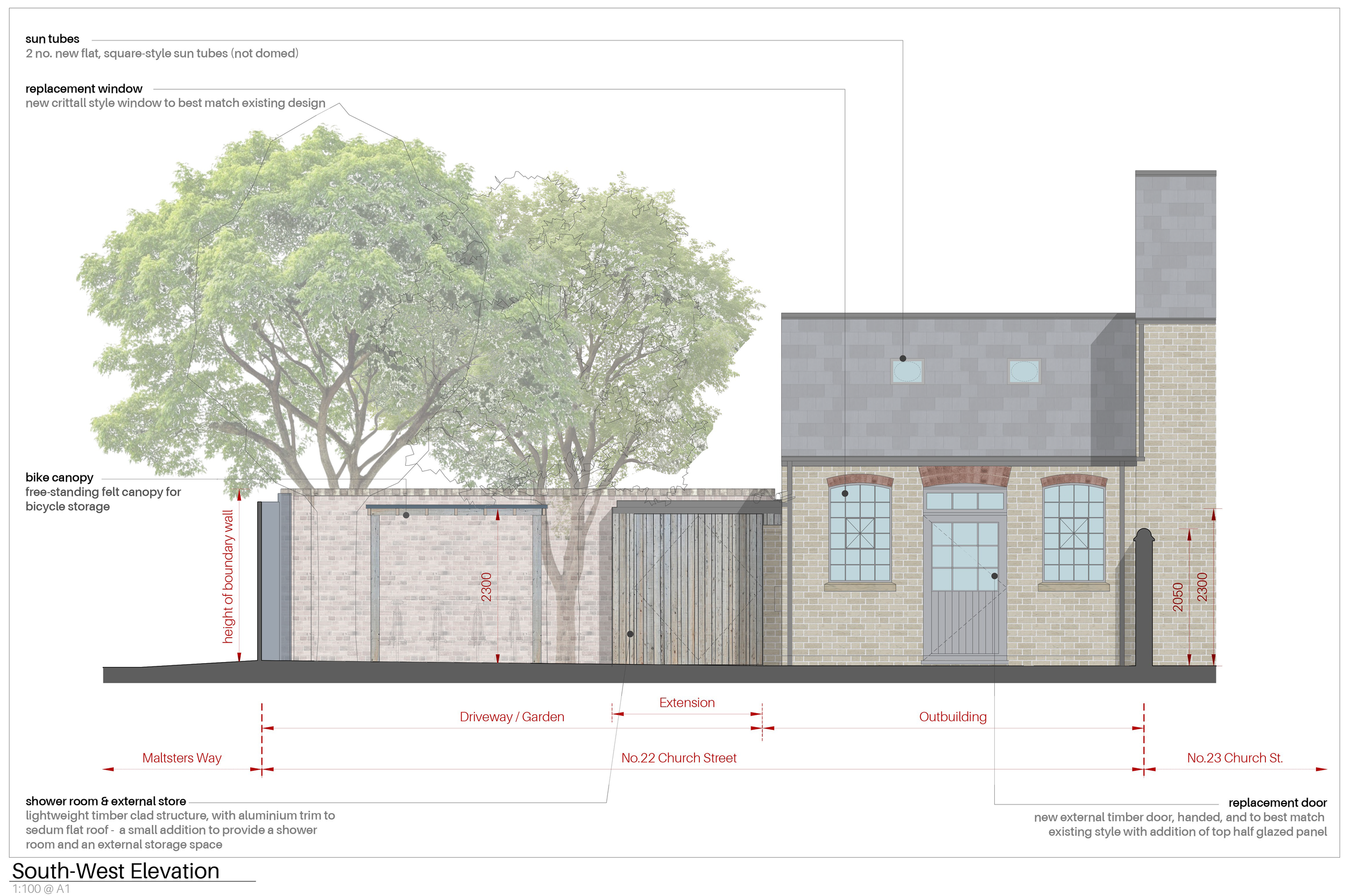
Planning approval was granted for the refurbishment and thermal upgrade of the existing outbuilding, a modest single-storey side extension, and the replacement of the existing garden shed with a lightweight open-sided bike storage canopy.
The approved material palette is deliberately restrained and complementary. The extension is proposed with a brick plinth, timber cladding, and a sedum green roof, allowing it to sit quietly alongside the existing brick structure. Replacement windows and the external door are designed to closely match the existing Crittall-style glazing and painted timber joinery, ensuring continuity with the original building.
All new elements are clearly legible as contemporary additions, while remaining sympathetic to the character and setting of the outbuilding and the wider Conservation Area.
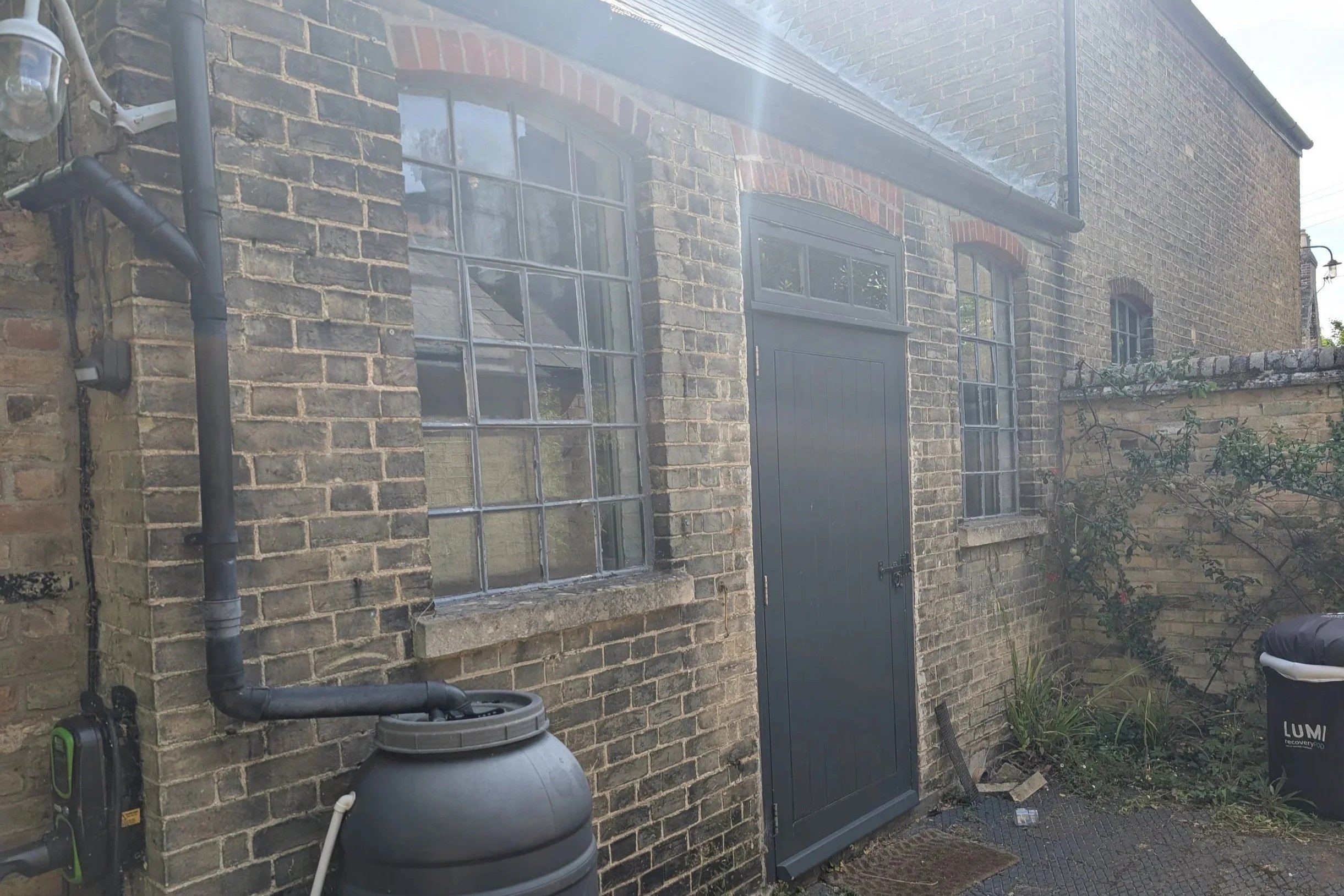
Proposals
The proposals include thermal upgrades to the existing structure, internal reconfiguration to improve usability, a small single-storey side extension, and the replacement of an existing shed with a lightweight bike storage canopy.
Careful consideration has been given to scale, massing, and materiality, ensuring the outbuilding remains ancillary to the main house and continues to read as part of the historic garden setting.
The design has been developed in close dialogue with planning and heritage considerations, resulting in a scheme that balances contemporary use with long-term conservation.
Next Steps
With the design and planning stage now complete, the project will progress to the next phase of technical development. Further information will be shared as the project moves forward.
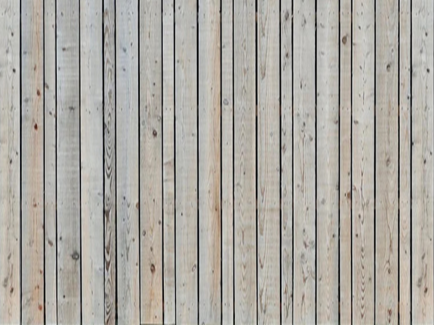
stained natural timber cladding
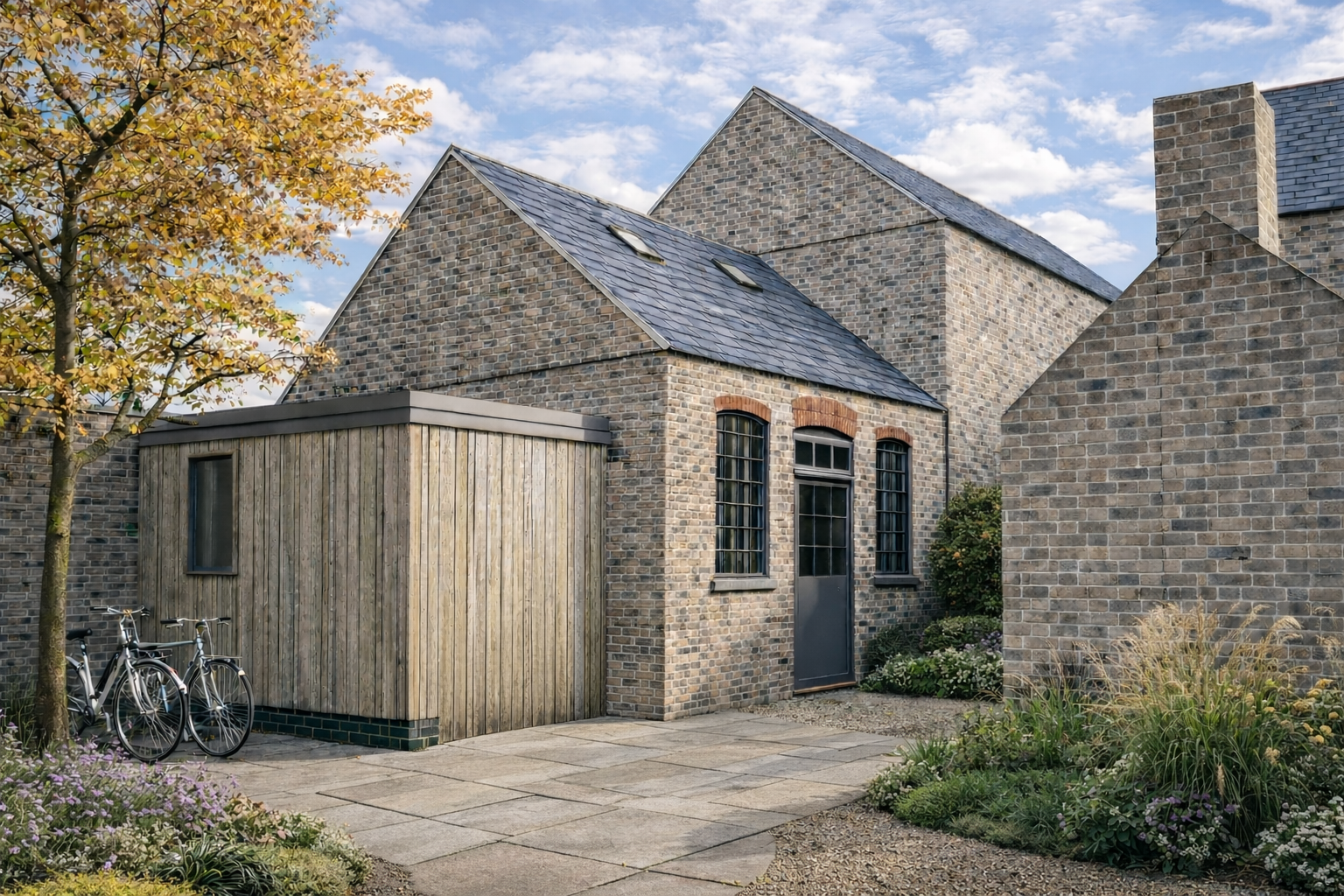

blue engineering brick to plinth
Material Board
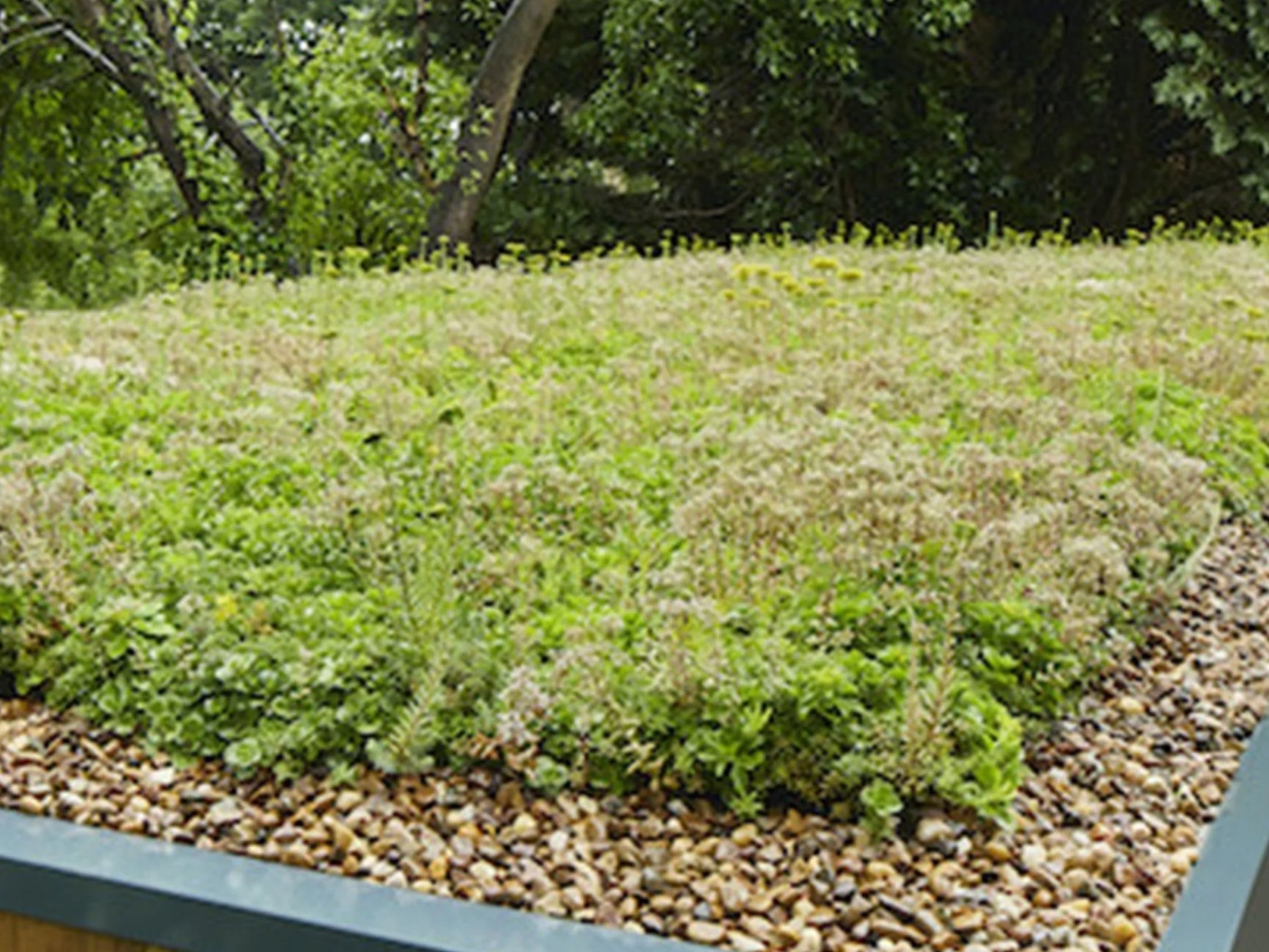
sedum flat roof
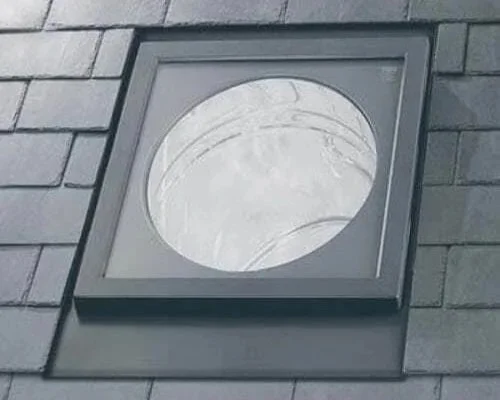
flat profile sun tubes